Fancy colour diamond grading, explained.
White diamonds are graded on how little colour they show. Fancy colours are graded on how much — and how beautifully. Here is how the system works, and what it means when you buy.
Hue, tone and saturation
Every coloured diamond is described by three things. Hue is the colour itself — yellow, brown, pink, blue, green. Tone is how light or dark that colour is. Saturation is how strong or pure it is. A stone can be light in tone but strongly saturated, or dark in tone and weak in saturation; grading combines the two into a single descriptive grade.
Colour is judged face-up, because that is how the stone is seen in jewellery, under a controlled daylight source and against a neutral background. Grading labs compare each stone to master references, so two labs looking at the same diamond should arrive at closely similar descriptions.
The grade scale
GIA, whose system the trade follows, describes fancy colour with these grades, from weakest to strongest:
| Grade | What it means |
|---|---|
| Faint, Very Light, Light | Colour is present but weak. For yellow and brown these overlap the end of the D–Z white scale. |
| Fancy Light | The first true fancy grade: the colour is clearly visible face-up. |
| Fancy | A moderate, attractive colour. |
| Fancy Intense | Strong colour with good saturation. |
| Fancy Vivid | The strongest saturation at a medium tone — the most prized grade. |
| Fancy Deep | Strong colour at a darker tone. |
| Fancy Dark | Dark tone with lower saturation. |
For yellow diamonds the boundary matters commercially: a stone graded beyond Z on the white scale moves into Fancy Light Yellow, and the way it is priced changes with it.
Modifiers and secondary colours
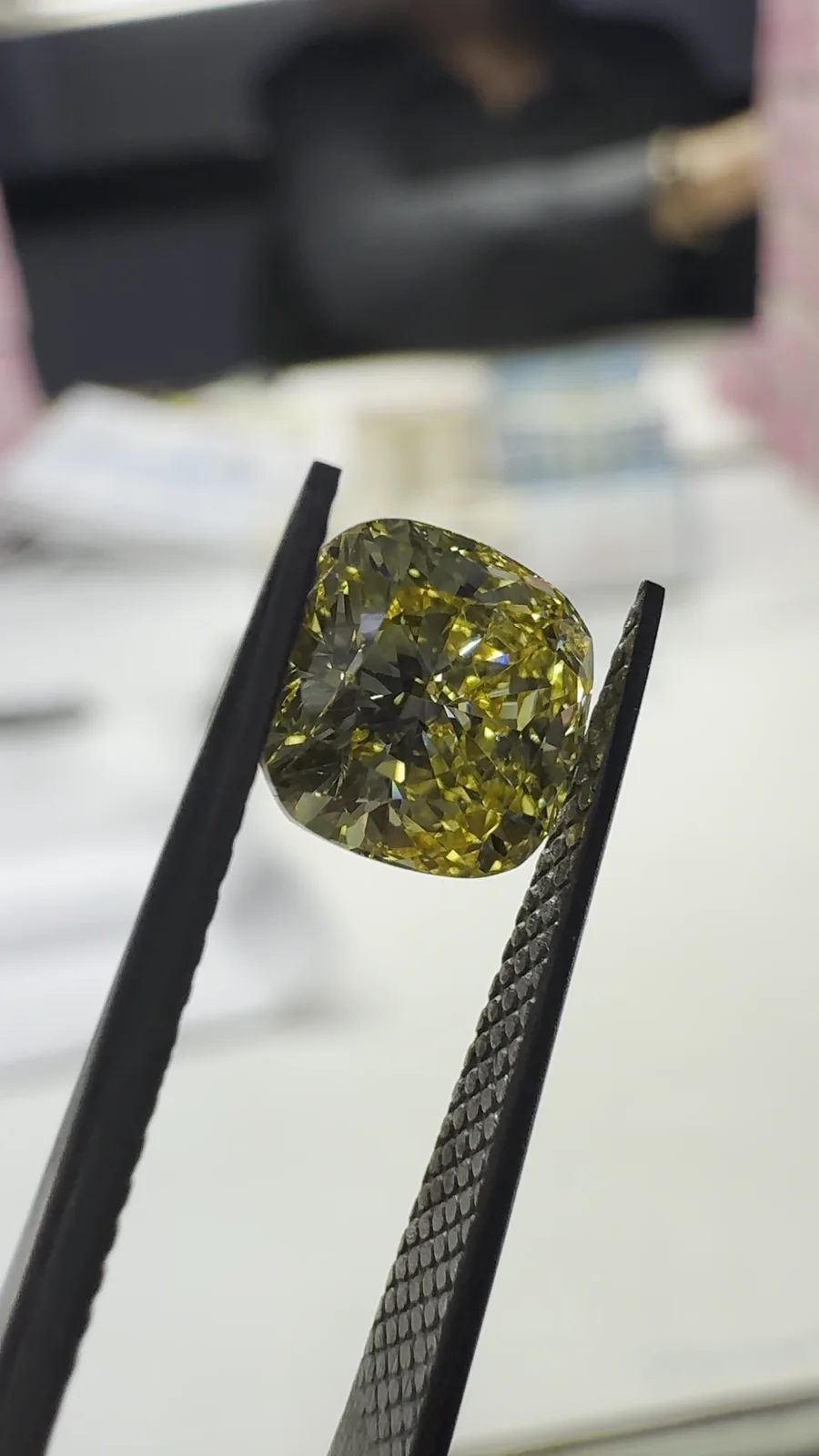
Many coloured diamonds show more than one hue. The report names the dominant colour last and the secondary colour before it, often as a modifier: a "Fancy Brownish Yellow" is mainly yellow with a brown component; a "Fancy Yellowish Brown" is the other way round. Modifiers can lift or lower value — a green or orange modifier in a yellow can be desirable, while a strong brown or grey modifier usually reduces price.
Champagne and brown
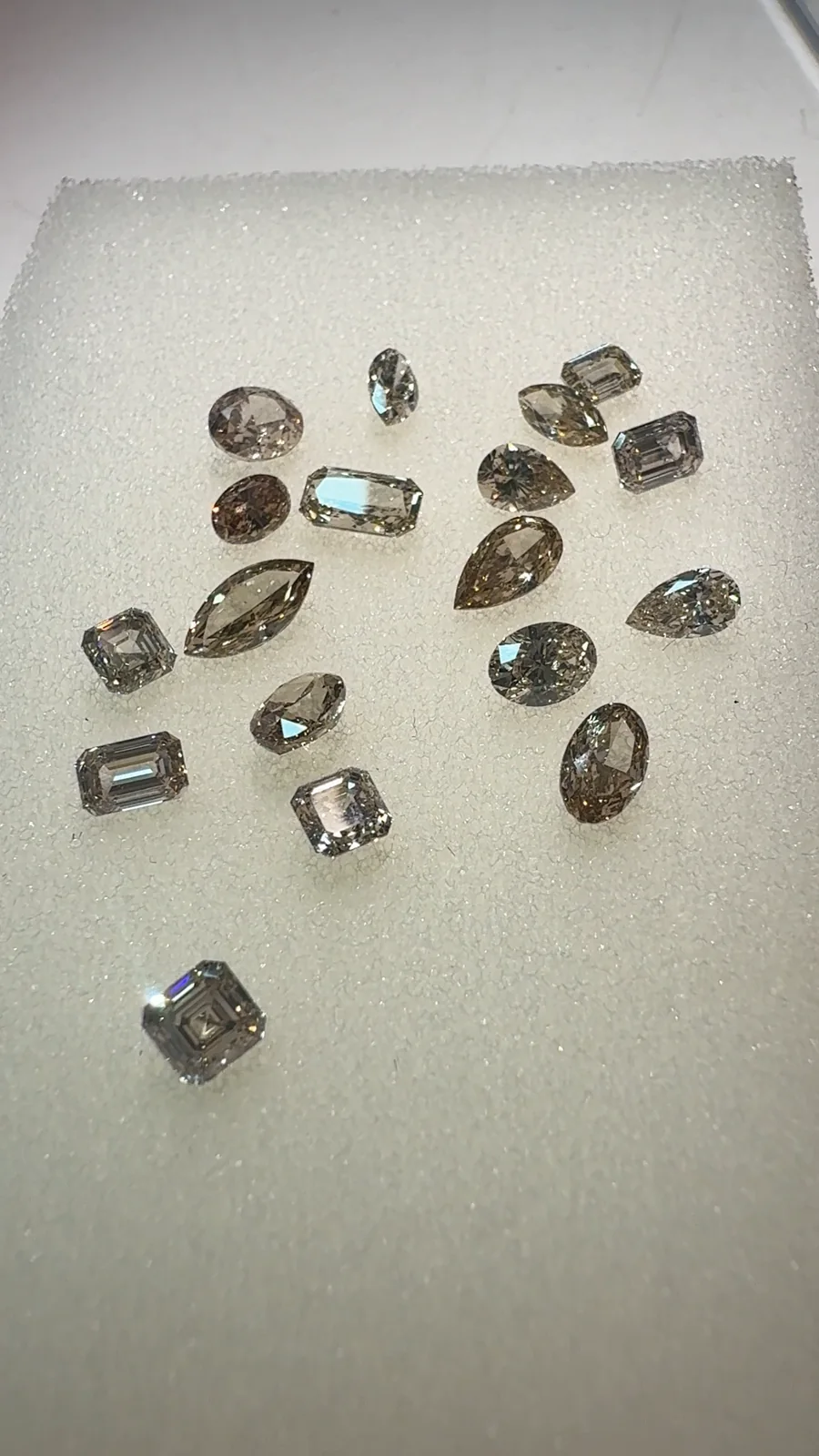
Brown is the most common natural fancy colour, and the trade sells it under warmer names: champagne for light to medium tones and cognac for the deepest, richest browns. Alongside the lab grade, many dealers describe these stones on a champagne scale running from light champagne to dark cognac, which makes it easier to match stones into a parcel by tone.
When you buy champagne in quantity, ask your supplier to match by eye under the same light, not only by the description on a paper. Two stones with the same words on their reports can still sit slightly apart in tone when set next to each other.
What drives price
- Hue: rarity sets the baseline. Pink, blue and green command far higher prices than yellow or brown.
- Grade: each step up the scale — Fancy to Fancy Intense to Fancy Vivid — moves price sharply, more than a step on the white colour scale.
- Modifiers: a pure hue is usually worth more than one with brown or grey.
- Cut: fancy shapes such as cushion and radiant concentrate colour, so many coloured stones are cut for colour rather than for maximum brilliance.
- Origin of colour: natural colour carries a large premium over treated colour, which is why a lab report confirming natural origin matters.
A buying checklist
- Ask for a GIA or IGI coloured diamond report that states the colour is natural.
- Check the full colour description, including modifiers — not just the grade.
- View the stone face-up in daylight, and against the metal it will be set in.
- For parcels, ask for stones matched by tone under the same light.
- Compare price within the same hue, grade and modifier — not across them.
We supply natural champagne, cognac and yellow diamonds, and source natural pinks on request. See our fancy colour diamonds or ask the desk for a matched parcel.
Questions buyers ask
Straight answers from the deskWhat is the highest fancy colour grade?
Fancy Vivid is the most prized grade — the strongest saturation at a medium tone. Fancy Deep and Fancy Dark describe strong colour at darker tones.
Is a champagne diamond the same as a brown diamond?
Yes. Champagne and cognac are trade names for natural brown diamonds, from light to deep tones.
How do I know a coloured diamond is natural?
Ask for a GIA or IGI coloured diamond report. It states whether the colour is natural or the result of treatment.
Anand Exports has been our primary rough supplier for over twelve years. Their consistency in parcel quality and documentation is unmatched in the market.