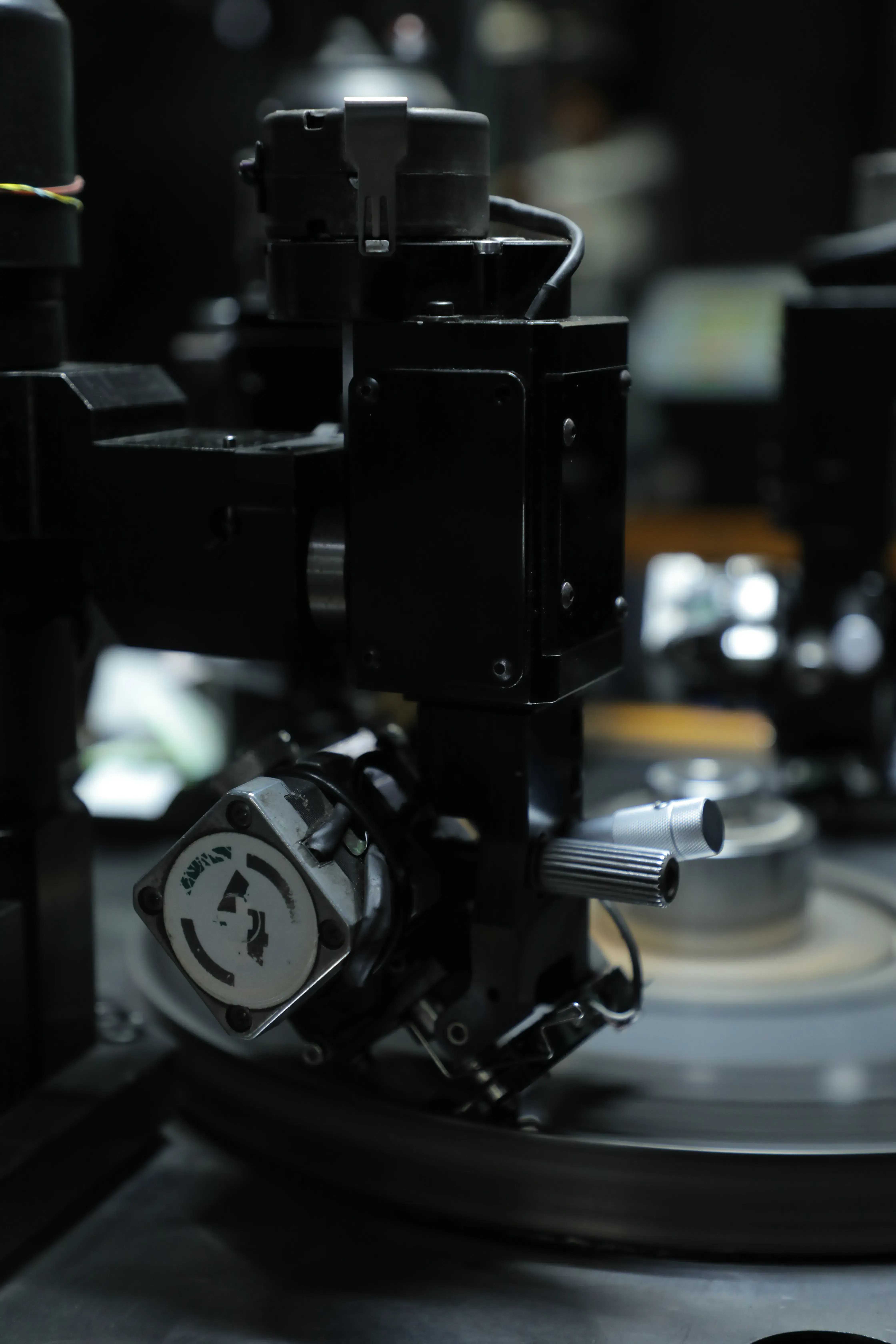
What is Diamond Polishing?
Diamond polishing is the art and science of cutting flat surfaces (facets) onto a diamond to unlock its optical properties. Because diamonds are the hardest known natural material, they can only be polished using other diamonds. The process determines the ultimate value of the stone; a poor polish will leave a diamond looking dull, while an excellent polish will ignite its internal fire.
The Stages of Manufacturing
Polishing is just one part of the journey. The complete manufacturing process involves several critical steps before the stone ever reaches the polishing wheel.
1. Planning and Scanning
The rough diamond is 3D scanned using advanced laser topography. AI algorithms map the stone's internal inclusions and determine the optimal cut to maximize yield and value.
2. Cleaving and Sawing
Using precise lasers, the rough stone is cut into separate pieces. This avoids major inclusions and sets the foundation for the final shapes.
3. Bruting
The separated pieces are spun on a lathe against another diamond to establish their basic outline, such as a round or oval silhouette.
4. Facet Polishing
This is where the magic happens. The stone is held in a "dop" (a specialized clamp) and lowered onto a spinning, cast-iron disc called a "scaif." The scaif is charged with a mixture of oil and diamond dust. The artisan polishes the main facets first (cross-working) and then adds the smaller facets (brillianteering).
The Importance of "Excellent" Polish
When sourcing from a manufacturer, buyers should demand "Excellent" polish grades. This means the facets are perfectly smooth with no visible wheel marks, burn marks, or scratches. Perfect polish allows light to enter and exit the diamond without disruption, creating the signature sparkle.
For more on sourcing these high-quality stones, read our guide to wholesale diamond procurement.
Frequently Asked Questions (FAQ)
How does the diamond polishing process work in Surat?
In Surat, traditional lapidary skill is combined with advanced laser technology. Rough stones are 3D-mapped, laser-cut, and then hand-polished by master artisans on high-speed scaifs to achieve Triple Excellent GIA grades.
What is a scaif in diamond polishing?
A scaif is a horizontal, spinning cast-iron wheel used in diamond polishing. It is coated with a paste of diamond dust and olive oil, providing the abrasive surface necessary to cut facets into a diamond.
What is the difference between bruting and polishing?
Bruting establishes the general shape and outline (the girdle) of the diamond, whereas polishing cuts the flat, reflective facets onto the surface to maximize its brilliance.
How long does it take to polish a diamond?
Polishing a standard 1-carat round brilliant diamond typically takes 4 to 8 hours of focused work by a master lapidary, though larger or more complex stones can take weeks.
Can a polished diamond be repolished?
Yes, diamonds that are chipped, scratched, or have poor symmetry can be repolished. However, this process removes material, reducing the carat weight of the diamond.